
What’s Causing My Elbow
and Wrist Pain
November Newsletter
Remember the sharp, stinging pain of hitting your funny bone? Thankfully, it only lasts for a few moments. But what happens when elbow or wrist pain lingers, affecting your daily life? If you’re dealing with discomfort in your elbow, forearm, or wrist, Maccio Physical Therapy in Troy, NY, is here to help!
There are several potential causes of elbow and wrist pain. The three major nerves running through the arm can become compressed or irritated, causing numbness, tingling, and pain. Injuries to the muscles, tendons, or ligaments in these joints can also lead to pain and limited mobility.
Our team of physical therapists will work with you to uncover the source of your pain and provide a tailored solution. If you’re ready to find relief, contact us today to schedule an appointment!

Understanding the Cauzes of Elbow and Wrist Pain
During your first visit, we’ll carefully evaluate your symptoms and perform movement assessments to pinpoint the cause of your pain. Here are some common culprits:
• Overuse Injuries: Repetitive movements or awkward postures can cause overuse injuries like tennis elbow or golfer’s elbow. These conditions develop gradually as the soft tissues in the joint become strained.
• Acute Injuries: Sudden injuries like wrist sprains, which damage the ligaments, or fractures in the bones of the wrist or elbow, can cause immediate pain and typically require prompt treatment.
• Nerve Compression: Nerve entrapment is another common cause of pain in the arm, elbow, and wrist. The specific nerve affected will determine where you feel the symptoms:
• Carpal Tunnel Syndrome: The median nerve can become trapped in the carpal tunnel in your wrist, causing pain, numbness, or tingling in the wrist and hand.
• Cubital Tunnel Syndrome: The ulnar nerve can become compressed in the cubital tunnel near the elbow, leading to discomfort in the elbow, forearm, and hand.
• Arthritis: Inflammation in the elbow or wrist joints due to arthritis can result in pain, stiffness, and restricted motion.
How Maccio Physical Therapy Can Help
Once we identify the root cause of your pain, we’ll design a personalized treatment plan to help you recover. Most elbow and wrist issues respond well to physical therapy. Here are some of the techniques we might use:
• The McKenzie Method: At Maccio Physical Therapy, we specialize in the McKenzie Method, which empowers patients to manage and alleviate pain through specific movements and exercises. This approach is highly effective for joint and nerve-related pain, helping you restore function and independence.
• Therapeutic Exercises: We’ll design a progressive exercise program tailored to your needs. These exercises will start with gentle movements to reduce pain, then build strength to stabilize the affected joint.
• Braces and Splints: In some cases, a brace or splint can help by temporarily immobilizing the joint. We’ll help you determine if this option is right for your condition.
• Injury Prevention: We’ll equip you with strategies to prevent future injuries, such as ergonomic adjustments, posture corrections, and tips for reducing strain on your elbow or wrist during repetitive activities.
• Manual Therapy: To reduce pain and improve mobility, we may use hands-on techniques to guide your joint through its range of motion or release tension in the soft tissues.

Ready to Find Relief?
Elbow and wrist pain can significantly affect your ability to perform everyday tasks, from brushing your teeth to typing at work. At Maccio Physical Therapy, our team is committed to helping you regain pain-free function and improve your quality of life.
Don’t let pain hold you back — contact Maccio Physical Therapy today to schedule your appointment!
Patient Success SPOTLIGHT
“I had been dealing with a sore/inflamed elbow for a number of months. At its most, it could be a constant nagging pain that would impact my mood and activities. Matt gave me some very simple exercises that seem to have completely fixed the issue. Even if it comes back, I feel as though I can self-treat with the tools I was given.”
—IB
“I dislocated my elbow skiing and had very limited mobility after cast/sling. I came a couple times a week and could always see progress which encouraged me. I went from a sticky joint to quite fluid. Wasn’t overwhelming with info just simple stretches that you could feel the difference from.”
—KJ
“I had injured my elbow and had pain which woke me up during the night, so I knew I needed physical help with healing it. I thought I could just rest it and the elbow would heal itself but that didn’t work. Thanks to Joe Maccio, my elbow is almost pain-free… I can now golf and do daily activities pain-free. I would recommend going to Maccio before corporate PT locations because you always get the highest quality of care.”
—KC
Greta, Wills, & Fritz’s Corner

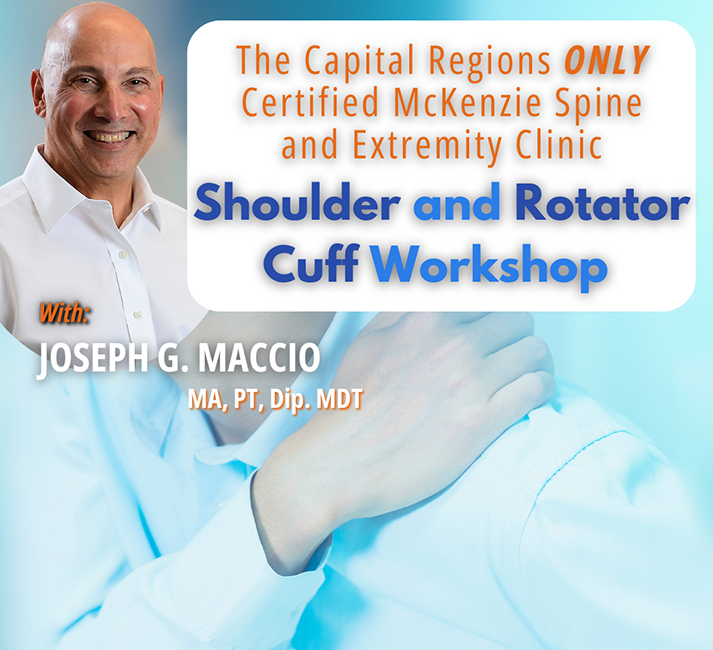
Free December Workshops


It’s Your Choice
Patient Choice — You have a choice to pick whatever physical therapy provider you wish. It is imperative to do your research in this area to be able to make this important choice.
Direct Access — Most insurance companies will allow you to see a physical therapist first before seeing your doctor.
Why Choose PT First?
“Positive MRI result should not be an indication for surgery unless the history and physical examination were found to be consistent with the MRI result.” (Robert F. LaPrade, MD — Steadman Research Institute)
“There is poor correlation between a patient’s clinical presentation and the reported MRI findings.” (Richard Herzog, MD, FACR — Hospital for Special Surgery)
It is extremely rare that we refer out for X-rays or MRIs with direct access patients, as the MDT mechanical examination is safe, effective, and rules out any serious concerns.
DID YOU SPOT OUR MISSPELLED WORD?
Don’t forget to call in with the misspelled word in each newsletter and refer a friend or family member to be entered to win a gift card!
Congratulations to our winners this month!
Referral: Naomi A. and Sean K.
Misspelled Word: Sidney L.
Let’s Get You Better ASAP!
Don’t let pain dictate your life. Take the first step towards reclaiming your mobility and well-being with our expert support. Start your journey to a healthier you today.