The Surprising Connection
Between Neck Pain and A Weak Upper Back

February Newsletter
Do you ever find yourself trying to rub out a sore spot in your neck or find it difficult to turn your head? Neck pain is a common concern that can range from a mild nuisance to a big problem. While neck pain can have several different causes, one contributing factor often gets overlooked: weakness in the shoulders or upper back.
When we deal with persistent aches and pains, poor muscle strength caused by poor posture often turns out to be a significant underlying factor. When a muscle isn’t as strong as it should be, other muscles have to step in to compensate, which puts unnecessary strain on them — and makes them more susceptible to overuse injuries. The result? Seemingly random aches and pains that “come out of nowhere.”
If you’re struggling with persistent neck pain, there’s a chance that the problem is rooted in your shoulders or upper back. Slouching and prolonged sitting with poor posture weakens those upper back muscles, forcing your neck muscles to work overtime — and leading to pain.
Let’s look at two case studies from the Maccio Physical Therapy files. Both people suffered from neck pain, but only one went through a dedicated strength training and posture correction program. What happened next?
Ally’s Story: No Time for Strength-Training
Ally was a receptionist who spent long days typing on a computer, answering the phone, and doing other clerical work. She started to notice a slight pain in her neck while she was at work. Although she ignored it at first, the pain persisted. She knew she needed to seek help.
Ally made an appointment with us, where we took her through a comprehensive assessment, including several movement and functional screens. We determined that she had strained the soft tissue in her neck due to her sedentary job.
We started Ally’s treatment with acute pain management using Mechanical Diagnosis and Treatment (MDT) techniques and some gentle mobility stretches, which did help her immediate symptoms. However, we knew it wouldn’t be enough to fully resolve her pain, so we suggested she begin a multi-week therapeutic exercise program to restore strength in her upper back and shoulders, helping to reduce the strain on her neck.
Unfortunately, Ally had decided to go back to school, and between work, her classes, and her family, she simply didn’t have time for physical therapy. So, while we were able to help Ally in the short term, her pain persisted in the long term, eventually landing her back in our clinic a year later.
Sarah’s Story: A Dedicated Strength Training Program
Sarah’s situation was very similar to Ally’s. She was a marketing assistant who also spent a great deal of time on both her laptop and a mobile phone, and she also experienced a gradual onset of neck pain. And, like Ally, she paid us a visit when it became too much.
We gave her a similar diagnosis: a strained neck muscle brought on by improper posture and prolonged sitting. We also provided her with acute pain relief. The difference? Sarah was able to continue her treatment with a six-week therapeutic exercise program.
We met with Sarah twice weekly to guide her through a custom set of targeted neck, shoulder, and upper back exercises. We started with gentle stretches and mobility work before progressing to resistance training exercises. With the help of some tubing and an exercise band, Sarah built strength through her upper body, providing her neck with the support it needed.
We also helped Sarah set up her workstation to be more ergonomic, including adjusting the height of her computer monitor and rearranging her keyboard. We also gave her some tips for maintaining postural awareness throughout the day.
The result? After six weeks, Sarah’s neck pain was entirely resolved — and she didn’t have to seek additional treatment!
Ready To Attack Your Neck Pain at the Source?
If you’re struggling with persistent neck pain, physical therapy at Maccio Physical Therapy can help you find lasting relief using MDT. Just as we did with Ally and Sarah, we’ll assess your symptoms and develop a customized treatment plan that seeks to resolve your neck pain altogether.

Patient Success SPOTLIGHT
“My right knee was hurting, making some movement really painful — such as using the elliptical machine. Doing a series of stretches over the past few weeks returned better movement and the pain and awkward sensation have dissipated.” —Phillip
“I was unable to work with pain in my neck and shoulders and also back pain. With the physical therapy and all the exercises that I have done, I am working 100% pain-free. The physical therapy has really helped me a lot and I would 100% recommend Maccio Physical Therapy to anyone. Thank you for helping me out.” —Michael


Don’t Go Falling (for Danger!) This Valentine’s Dayyy
Love is in the air, but winter’s icy grip can turn a romantic stroll into a not-so-sweet tumble. Slippery sidewalks and unfamiliar surroundings during visits with loved ones can pose a significant risk for falls. Protect yourself and those you care about this season by keeping an eye out for signs of increased fall risk:
- Struggling to stand up from a chair without using your hands.
- Being unable to reach forward more than 10 inches with your feet together.
Falls can break more than just hearts, but specialized tests can help identify potential issues with strength, balance, and mobility. Our clinic offers personalized assessments and exercise programs to help you move with confidence.
Don’t let falls ruin your Valentine’s plans. Call us today to schedule an assessment and take the first step toward staying safe and steady.
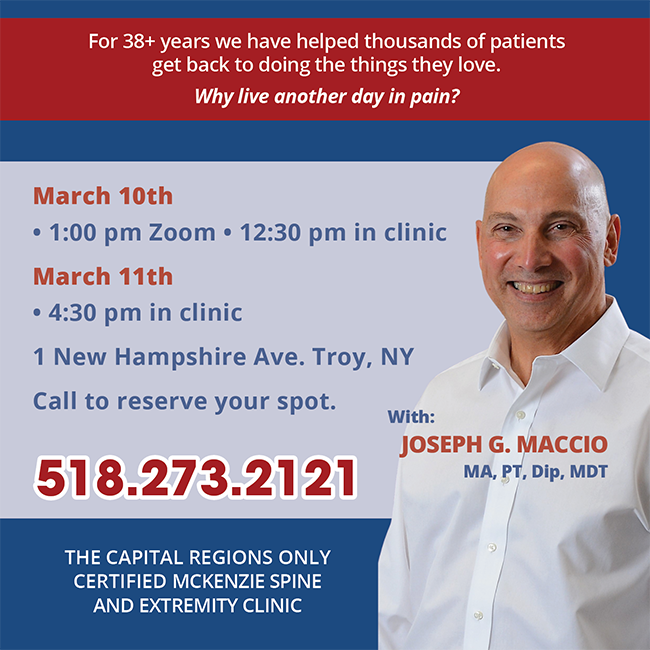
Free Workshop


It’s Your Choice
Patient Choice — You have a choice to pick whatever physical therapy provider you wish. It is imperative to do your research in this area to be able to make this important choice.
Direct Access — Most insurance companies will allow you to see a physical therapist first before seeing your doctor.
Why Choose PT First?
“Positive MRI result should not be an indication for surgery unless the history and physical examination were found to be consistent with the MRI result.” (Robert F. LaPrade, MD — Steadman Research Institute)
“There is poor correlation between a patient’s clinical presentation and the reported MRI findings.” (Richard Herzog, MD, FACR — Hospital for Special Surgery)
It is extremely rare that we refer out for X-rays or MRIs with direct access patients, as the MDT mechanical examination is safe, effective, and rules out any serious concerns.
DID YOU SPOT OUR MISSPELLED WORD?
Don’t forget to call in with the misspelled word in each newsletter and refer a friend or family member to be entered to win a gift card!
Congratulations to our winners this month!
Referral: Susanne K. and Emma B.
Misspelled Word: Carolyn C.
Let’s Get You Better ASAP!
Don’t let pain dictate your life. Take the first step towards reclaiming your mobility and well-being with our expert support. Start your journey to a healthier you today.