
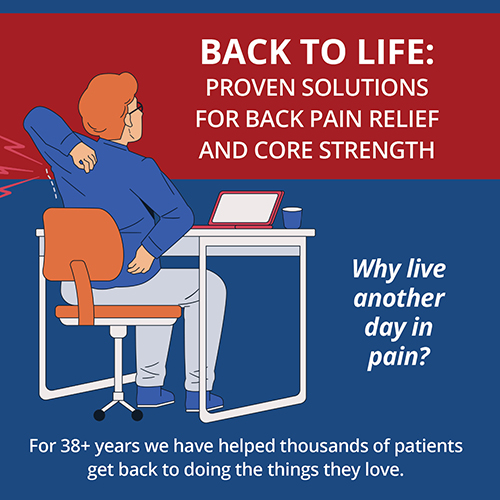
How to Relieve Your Sciatica Pain with Physical Therapy
June Newsletter
Are you experiencing the following symptoms?
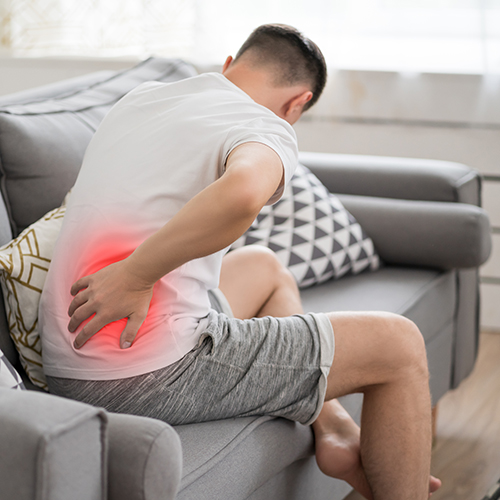
• Burning or “electric” pain that radiates from your lower back down through your leg
• Numbness, tingling, or a pins and needles sensation in your back or leg
• A sense of weakness or heaviness in your leg
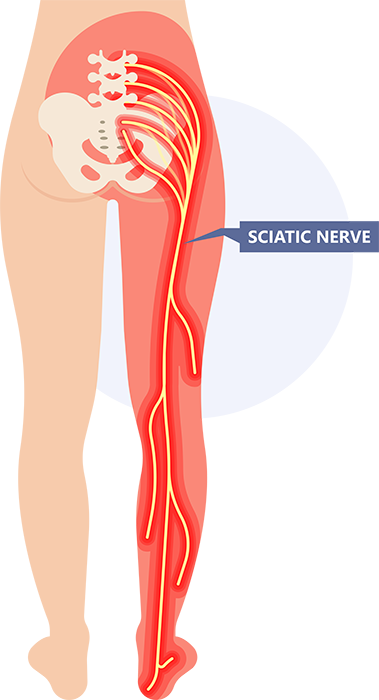
If so, you may have developed sciatica, which isn’t so much a condition in and of itself as it is a sign of something else, such as a herniated disc or issues with your spine. It develops when the sciatic nerve — a major nerve that runs from your lower back all the way down to your feet — becomes pinched or irritated in some way.
Sciatica is a somewhat misunderstood term. Some people use it to describe any pain or discomfort in the lower half of your body. But true sciatica is a neuropathy that affects the sciatic nerve, and to address it, you need to resolve the underlying source of irritation to the sciatic nerve.
Fortunately, the physical therapists at Maccio Physical Therapy can help you do exactly that! Today, we want to give you a glimpse of the process we use when addressing sciatica and sciatic pain.
Step 1: Confirm Sciatica and Uncover the Cause
When you visit us for your first appointment, we’ll begin by confirming that the discomfort in your lower extremity actually involves the sciatic nerve at all. Other conditions can cause sciatica-like symptoms, such as spinal osteoarthritis or piriformis syndrome.
If we confirm that your sciatic nerve is impaired, our next step is figuring out why. By far, the most common cause of sciatica is a herniated disc, which occurs when an intervertebral disc bulges and presses against the sciatic nerve. Less commonly, spinal stenosis (a narrowing of the spinal canal) can irritate the sciatica nerve, as can damage from osteoarthritis.
Step 2: Develop a Treatment Plan
Once we know why you’ve developed sciatica, we’ll work to develop a treatment plan to address that underlying cause. Fortunately, physical therapy is the preferred method for treating most of the common causes of sciatic pain.
If your sciatica results from a herniated disc, we’ll help you reduce your pain and facilitate your recovery. Herniated discs will generally resolve within 2 weeks, and regular physical therapy can help speed up that process. You can expect the following:
• A drug-free pain management plan utilizing manual therapy, movement modifications, and pain-relieving modalities
• Targeted mobility exercises to free up restrictions in your spine
• Postural corrections to remove pressure from the herniated disc
• Strengthening exercises, particularly in your core, to help stabilize and support the spine
• A return-to-activity schedule to ensure you don’t reinjure yourself
If your sciatica results from spinal stenosis or arthritis, we’ll focus on helping to relieve the pressure from your sciatic nerve. Treatment will generally resemble what we do for herniated discs, including pain management, mobility work, and strengthening exercises, adapting them as needed.
Step 3: Prevent Future Bouts of Sciatica
Once we’ve helped resolve your sciatica, we also want to help prevent it from occurring again. We’ll provide you with the guidance you need to stay pain-free. Here are a few sciatica prevention tips to get you started:
• Improve your posture, which means keeping your spine in alignment. Our PTs can show you how!
• Avoid prolonged postures, especially prolonged sitting. If you have a desk job, get up and move around every 30 minutes or so. If you have a job that requires you to stand in one position for an extended period, take breaks and switch up how you’re standing (such as shifting your weight back and forth).
• Get moving! A regular exercise routine will help keep your back and core muscles strong. Our physical therapists can suggest specific exercises and workout options to ensure you stay active even after finishing physical therapy.
• Use proper lifting techniques. We’ll show you what you need to know.

Say Goodbye to Sciatica Pain
If you suspect you’re dealing with sciatica, call the team at Maccio Physical Therapy to make an appointment. We can let you know for certain and guide you to lasting pain relief — whether or not your sciatic nerve is to blame.
Patient Success SPOTLIGHT
“Before PT I experienced pain and difficulty getting out of bed, standing after sitting, and getting dressed. Now, I can do all of these things easily and without pain. I have definitely become a true believer in PT and McKenzie therapy in relieving back pain and sciatica and improving back health.”
—Peter
“I threw my back out from coughing when I had a bad cold. Lindsay Carlton is a miracle worker. She gave me exercises that gave me relief on day 1. She saw me through therapy until I was pain-free. She gave me tips for continuing to be pain-free after I leave therapy. Come see Lindsay for all your pain!”
—Bryan
Greta, Wills, Fritz, & Roberta’s Corner
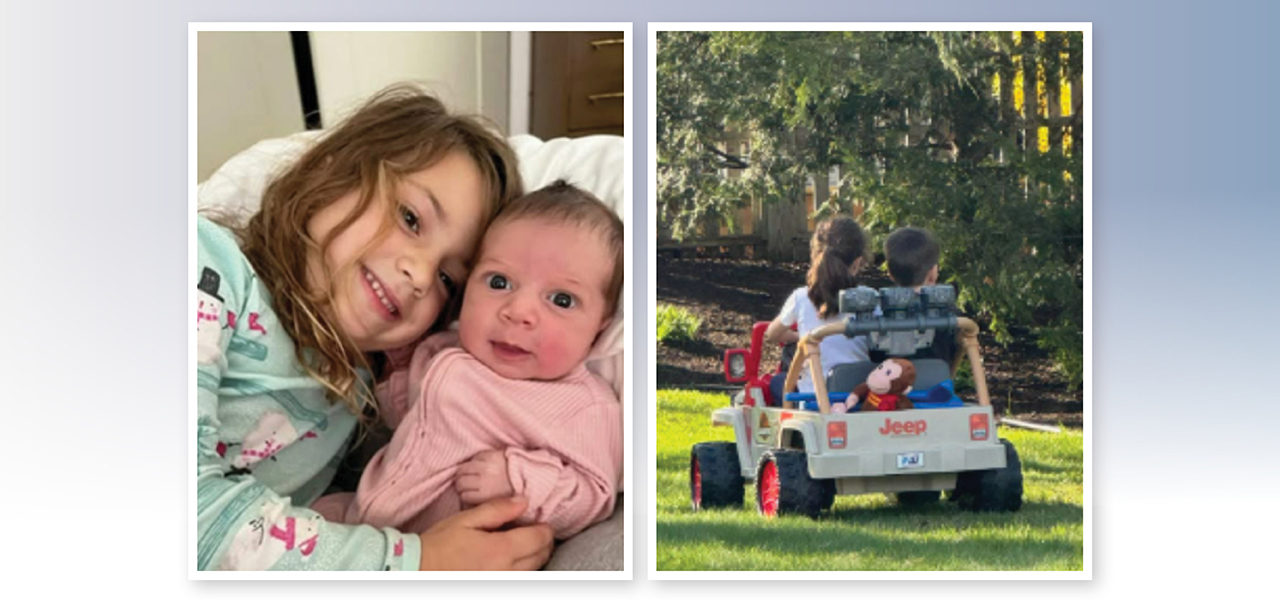

Happy Father’s Day from Greta, Wills, Fritz, & Roberta!
Today we celebrate all the awesome dads who teach us, cheer us on, and make life extra fun! Whether they’re building cool projects, coaching our teams, telling the best (or silliest!) jokes, or helping us stay strong and healthy like Senior does, dads are true heroes every day.
So today, give your dad a big high-five, a giant hug, and maybe even show him a stretch or two from Senior’s playbook to keep him feeling great!
Happy Father’s Day to all the amazing dads — you’re unbeleafable!
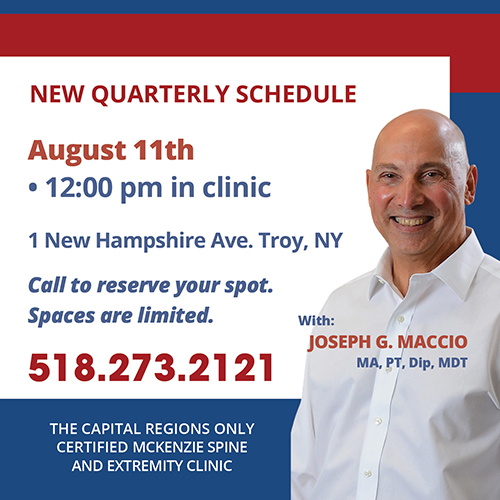
Free Workshop
NEW QUARTERLY FREE WORKSHOP SCHEDULE

It’s Your Choice
Patient Choice — You have a choice to pick whatever physical therapy provider you wish. It is imperative to do your research in this area to be able to make this important choice.
Direct Access — Most insurance companies will allow you to see a physical therapist first before seeing your doctor.
Why Choose PT First?
“Positive MRI result should not be an indication for surgery unless the history and physical examination were found to be consistent with the MRI result.” (Robert F. LaPrade, MD — Steadman Research Institute)
“There is poor correlation between a patient’s clinical presentation and the reported MRI findings.” (Richard Herzog, MD, FACR — Hospital for Special Surgery)
It is extremely rare that we refer out for X-rays or MRIs with direct access patients, as the MDT mechanical examination is safe, effective, and rules out any serious concerns.
DID YOU SPOT OUR MISSPELLED WORD?
Don’t forget to call in with the misspelled word in each newsletter and refer a friend or family member to be entered to win a gift card!
Congratulations to our winners this month!
Referral: Meg L. & Melissa K.
Misspelled Word: Johna B.
Let’s Get You Better ASAP!
Don’t let pain dictate your life. Take the first step towards reclaiming your mobility and well-being with our expert support. Start your journey to a healthier you today.